









Are you interested in finance, accountability, and giving back to your community? TEG Federal Credit…

What Rising Home Sales and Spending Trends Mean for You
Published on April 27, 2026 | Last Updated October 13, 2026
Pending home sales rise in March, offering an encouraging sign for the housing market. Alongside stronger retail sales and evolving employments trends, the latest economic data paints a picture of a resilient economy that continues to adapt to changing conditions.
For homebuyers, homeowners, and anyone keeping an eye on mortgage rates, these trends are worth watching closely.
Pending Home Sales Rise in March
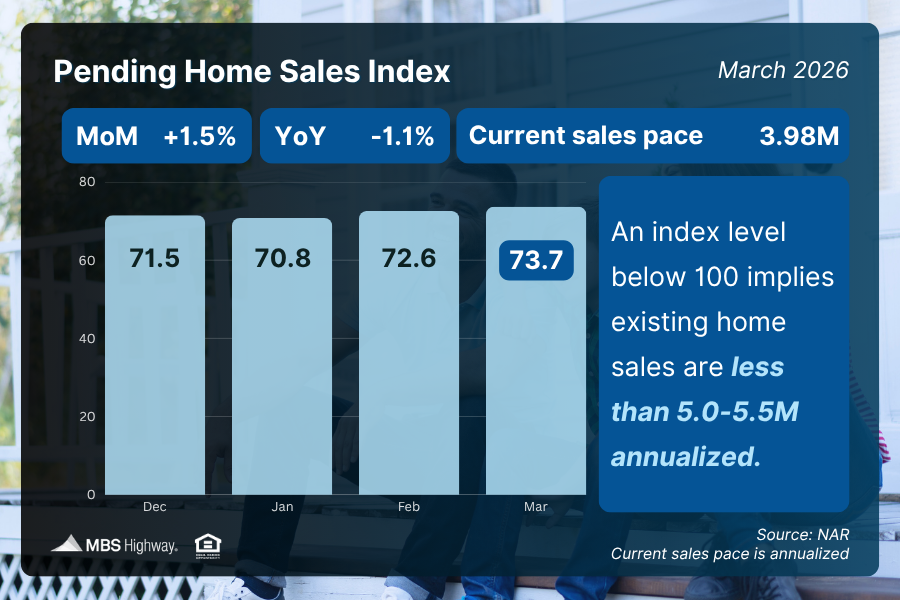
Pending home sales, which measure signed contacts on existing homes, increased 1.5% from February to March. This gain exceeded expectations and suggests that buyer demand remains steady, even in a higher-rate environemtn.
While contract activity is still slightly below where it was a year ago, the monthly increase is a positive development. The Northeast and South saw the strongest gains, while the Midwest and West experienced more modest activity.
What This Means for Homebuyers
The fact that pending home sales rise despite elevated mortgage rates highlights continued pent-up demand. Many buyers are still actively searching for homes, even as affordability remains a challenge.
However, inventory continues to play a critical role. More homes on the market would help meet buyer demand and support additional sales activity in the months ahead.
If you’re considering buying a home, understanding your financing options is essential. TEG Federal Credit Union offers competitive mortgage solutions and experienced mortgage professionals who can help you navigate today’s market with confidence.
Retail Sales Show Consumer Resilience
Retail sales increased 1.7% in March, surpassing economists’ expectations. Core retail sales—which exclude autos, gas, building materials, and food services—also rose a solid 0.7%.
Because core retail sales feed directly into GDP calculations, this increase suggests that consumer spending remains relatively healthy.
A Closer Look at the Numbers
Much of the overall increase was driven by higher gasoline prices. In other words, consumers spent more at the pump, but not necessarily because they were buying more goods overall.
If energy prices remain elevated, it could eventually affect spending in other areas, particularly discretionary purchases.
Jobless Claims Highlight Changing Workforce Trends
Initial jobless claims rose slightly by 6,000 to 214,000, remaining low by historical standards. Continuing claims, however, increased to 1.821 million.
This suggests that while layoffs remain limited, individuals who are unemployed may be taking longer to find new opportunities.
Why This Matters
The labor market continues to evolve. More workers are turning to freelance, contract, or gig opportunities, which may reduce the number of people filing for unemployment benefits.
At the same time, elevated continuing claims indicate that job searches may be taking longer for those seeking traditional employment.
The Bottom Line
As pending home sales rise, the housing market continues to show resilience. Combined with solid consumer spending and a labor market that is adapting to new work patterns, the economy remains on stable footing.
For prospective homebuyers, this is a reminder that opportunities still exist, even in a changing market. Having the right mortgage partner can make all the difference.
TEG Federal Credit Union is here to help with personalized mortgage solutions, competitive rates, and expert guidance every step of the way. Whether you’re buying your first home, refinancing, or exploring your options, our team is ready to assist.
Categories: Mortgage & Home Loans
More Recent Posts


Retirement might feel like a long way off, but the choices you make today can…

September is National Preparedness Month, which means it’s the perfect time to take a look…

National Dog Day is August 26th, and it is all about celebrating the four-legged friends…