










Are you interested in finance, accountability, and giving back to your community? TEG Federal Credit…

Mixed Jobs Data, Strong Home Sales
Published on May 11, 2026 | Last Updated October 13, 2026
The latest economic reports delivered a mixed picture for the labor market, but the housing market continues to show resilience. While hiring trends showed signs of slowing beneath the surface, new home sales exceeded expectations and home price forecasts remain positive.
For homebuyers and homeowners, these updates highlight an important reality: even during periods or economic uncertainty, real estate can continue to offer long-term value and opportunity.
Headline Job Growth Looks Strong, But Details Tell a Different Story
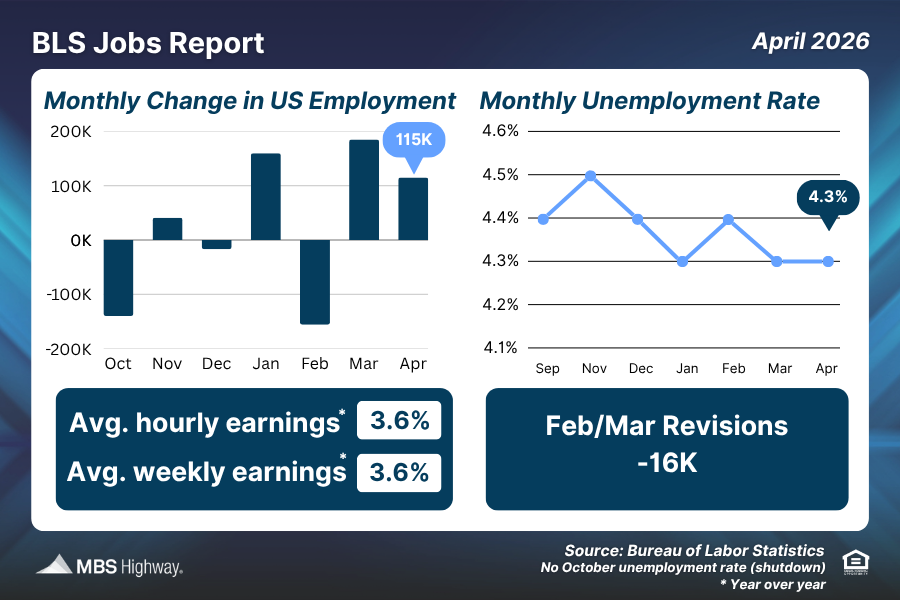
According to the latest report from the Bureau of Labor Statistics (BLS), the economy added 115,000 jobs in April, outperforming forecasts of around 60,000 jobs. The unemployment rate also held steady at 4.3%.
At first glance, those numbers appear encouraging. However, revisions to previous months and underlying employment trends paint a more complicated picture.
One of the biggest concerns was a decline in full-time employment. Full-time jobs dropped by 424,000, while part-time employment increased by 123,000. In addition, the number of people working part-time for economic reasons (meaning they would prefer full-time work but cannot find it) rose significantly.
Another important trend is where hiring is happening. Much of the recent job growth has been concentrated in Health Care and Social Assistance, industries that continue to expand due to increased demand from an aging population. While those sectors remain strong, the gains do not necessarily reflect broad economic strength across all industries.
ADP Report Highlights a Divided Labor Market
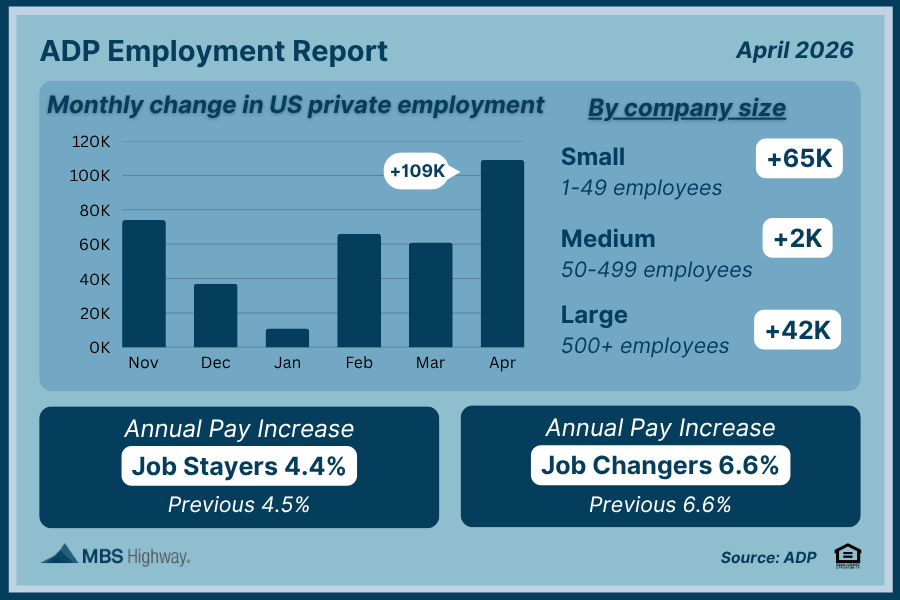
The ADP employment report showed private employers added 109,000 jobs in April, beating expectations. But the data revealed major differences depending on business size and industry.
Small and large businesses accounted for most of the hiring activity, while mid-sized companies showed relatively weak growth. According to ADP Chief Economist Dr. Nela Richardson, large businesses often have greater financial flexibility, while smaller businesses can adapt more quickly during uncertain conditions.
However, many of the jobs created at smaller companies were lower-paying or part-time positions.
Hiring also remained concentrated in traditionally stable sectors such as education and health services, which tend to perform better during slower economic periods.
Wage growth data also suggests that labor market is cooling. Employees who changed jobs still earned larger pay increases than workers who stayed in their current roles, but the gap between the two narrowed compared to previous years. That often signals a less competitive job market overall.
Additional Labor Reports Show Signs of Slowing
Other labor market indicators continued to send mixed signals.
Revelio Labs reported modest hiring growth in April, marking the strongest monthly increase since last summer. At the same time, job openings declined slightly and remain far below the elevated levels seen in 2022.
Initial unemployment claims have stayed relatively low, but some economists believe those numbers may not fully capture labor market stress because more displaced workers are turning to freelance or gig work instead of filing for benefits.
Continuing unemployment claims also remain elevated, suggesting many job seekers are taking longer to find new positions.
Meanwhile, Challenger, Gray & Christmas reported over 83,000 job cuts in April, a notable increase from the previous month. AI-related restructuring was cited as a leading factor behind layoffs for the second month in a row.
Overall, while parts of the labor market remain stable, the broader trend points toward slower hiring and softer economic conditions beneath the surface.
New Home Sales Continue to Impress
Despite uncertainty in the labor market, the housing sector showed encouraging momentum.
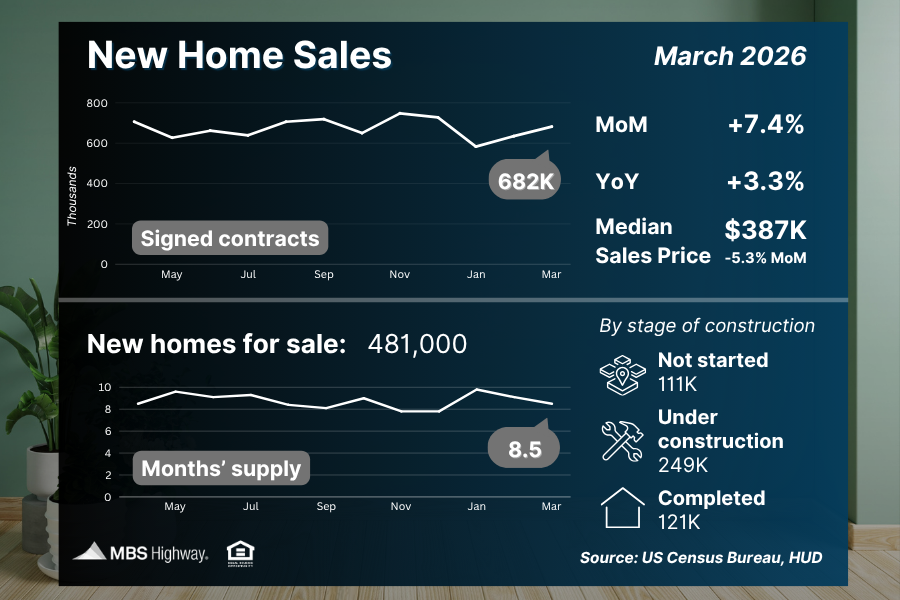
The Census Bureau’s delayed February and march new home sales reports both came in stronger than expected. Sales increased 9% in February and another 7.4% in March, representing nearly 17% growth since January.
Some reports focused on the decline in the median home price between February and March, but that does not necessarily mean home values are falling.
Median prices can shift depending on the types of homes being sold. In this case, more homes under $500,000 were sold during the period, while fewer higher-priced homes closed, naturally lowering the midpoint price.
That distinction matters because lower median prices do not automatically mean the housing market is weakening. In fact, broader price trends continue to point toward steady appreciation.
Home Price Forecasts Remain Positive
According to Cotality’s latest Home Price Insights report, home prices increased 0.4% from February to March and were also up 0.4% year-over-year.
Even more encouraging, Cotality now projects home prices could rise approximately 5.1% over the next year, slightly above its previous forecast.
For buyers, this reinforces the long-term wealth-building potential of homeownership. A home valued at $500,000 appreciating by 5% would gain roughly $25,000 in value over one year alone.
While market conditions may continue to shift, steady home appreciation remains one of the key reasons many buyers continue to view real estate as a long-term investment opportunity.
The Bottom Line
Recent labor market reports suggest the economy is showing mixed signals, with slower hiring and growing softness beneath stronger headline numbers. However, the housing market continues to demonstrate resilience through stronger-than-expected new home sales and positive home price forecasts.
For buyers considering entering the market, today’s environment may still present meaningful long-term opportunities.
At TEG Federal Credit Union, our mortgage team is here to help you understand your options, navigate the homebuying process, and find financing solutions that fit your goals.
Categories: Mortgage & Home Loans
More Recent Posts


Retirement might feel like a long way off, but the choices you make today can…

September is National Preparedness Month, which means it’s the perfect time to take a look…

National Dog Day is August 26th, and it is all about celebrating the four-legged friends…