









Are you interested in finance, accountability, and giving back to your community? TEG Federal Credit…

Inflation and Housing Market Update: What it Means for Borrowers
Published on May 20, 2026 | Last Updated October 13, 2026
Inflation continued to rise in April, adding new uncertainty around interest rates and borrowing costs. At the same time, the housing market showed small signs of improvement as existing home sales moved slightly higher and inventory increased.
For consumers, these trends can impact everything from mortgage rates to everyday expenses. Here’s a closer look at the latest inflation and housing market update and what it could mean for your financial decisions.
Inflation Remains Higher Than Expected
April’s inflation data showed prices continuing to climb at both the consumer and wholesale levels.
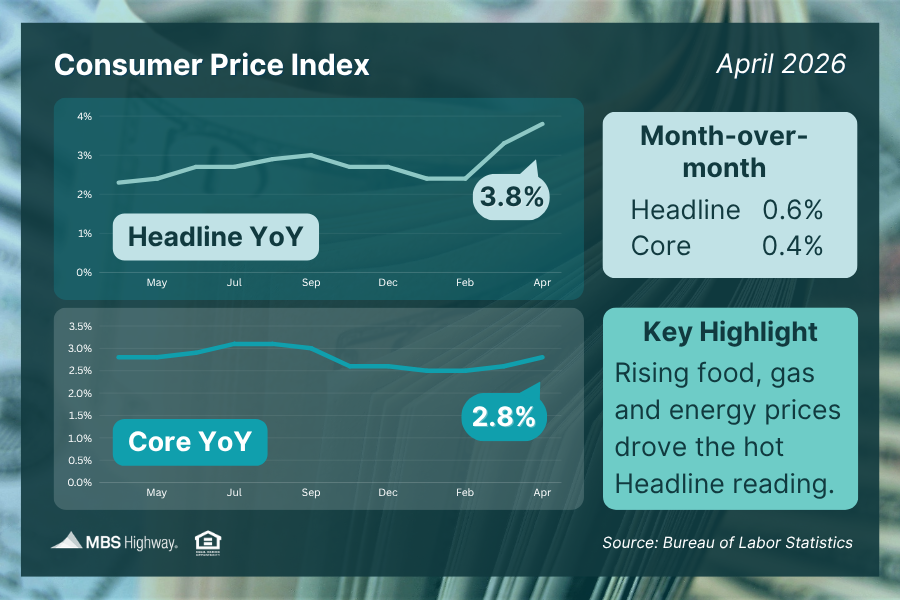
The Consumer Price Index (CPI), which measures changes in prices consumers pay for goods and services, increased 0.6% in April and 3.8% year over year. Rising gas prices and food costs were among the biggest contributors to the increase.
Core inflation — which removes food and energy prices to provide a clearer long-term view — also came in stronger than expected, rising 0.4% for the month and 2.8% annually.
Wholesale inflation showed similar pressure. The Producer Price Index (PPI), which tracks costs businesses pay for goods and materials, jumped 1.4% in April and 6% compared to last year.
What Does Inflation Mean for Interest Rates?
Inflation plays a major role in how the Federal Reserve approaches interest rates.
When inflation remains elevated, the Fed may keep rates higher for longer in an effort to slow spending and stabilize prices. However, if economic growth or the labor market weakens significantly, the Fed could still consider rate cuts later this year.
The Federal Reserve has kept rates unchanged so far in 2026 after several cuts late last year. While the Fed does not directly control mortgage rates, its decisions strongly influence borrowing costs across the economy.
Markets are also watching closely as Kevin Warsh beings his term as the new Chair of the Federal Reserve following Jerome Powell’s departure. His first Federal Reserve meeting as Chair, scheduled for June 16-17, could provide important insight into the future direction of interest rates.
Existing Home Sales Show Modest Improvement
The housing market showed some encouraging movement in April.
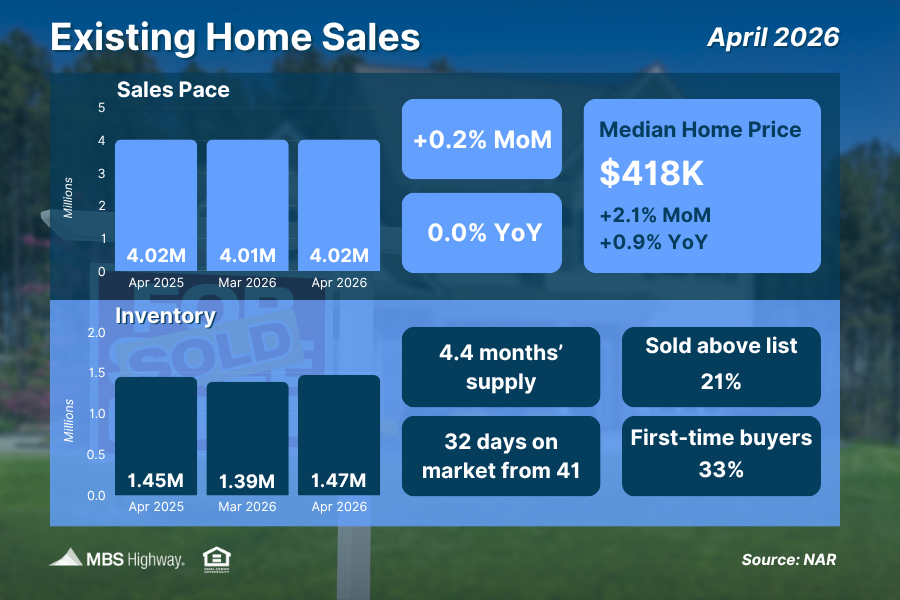
According to the National Association of REALTORS®, existing home sales increased slightly by 0.2% after declining in March. Housing inventory also improved, rising to 1.47 million homes available for sale.
While inventory remains below historical averages, more available homes may help ease competition for buyers. Industry experts also note that bidding wars have become less intense compared to recent years, giving buyers a bit more flexibility during the home search process.
Improving affordability has also helped support housing activity despite ongoing economic uncertainty.
Consumer Spending and the Labor Market Remain Mixed
Consumer spending continued to hold steady in April.
Retail sales rose 0.5%, matching expectations. Spending remained relatively stable even as higher fuel prices continued putting pressure on household budgets.
The labor market, however, presents a more mixed picture.
New unemployment claims remain relatively low, but continuing unemployment claims have stayed elevated. This may suggest that while layoffs are limited, some job seekers are taking longer to find new opportunities.
Economic uncertainty can affect consumer confidence, borrowing decisions, and overall financial planning — especially for those considering major purchases like a home or vehicle.
What Borrowers Should Keep in Mind
For borrowers and homebuyers, today’s economic environment highlights the importance of preparation and flexibility.
Even with inflation remaining elevated, there may still be opportunities to:
- Explore refinancing options
- Lock in competitive mortgage or auto loan rates
- Improve budgeting and savings strategies
- Strengthen credit before applying for financing
At TEG Federal Credit Union, our team is here to help you navigate changing market conditions with personalized guidance and lending solutions designed to support your financial goals.
The Bottom Line
The latest inflation and housing market update shows an economy balancing several competing trends: persistent inflation, moderating housing competition, and a labor market that is showing signs of slowing.
While interest rate uncertainty remains, improving housing inventory and steady consumer spending may offer opportunities for borrowers who stay informed and financially prepared.
If you’re thinking about buying a home, refinancing, or exploring loan options, TEG Federal Credit Union can help you understand you choices and make confident financial decisions.
Categories: Mortgage & Home Loans
More Recent Posts


Retirement might feel like a long way off, but the choices you make today can…

September is National Preparedness Month, which means it’s the perfect time to take a look…

National Dog Day is August 26th, and it is all about celebrating the four-legged friends…