









Are you interested in finance, accountability, and giving back to your community? TEG Federal Credit…
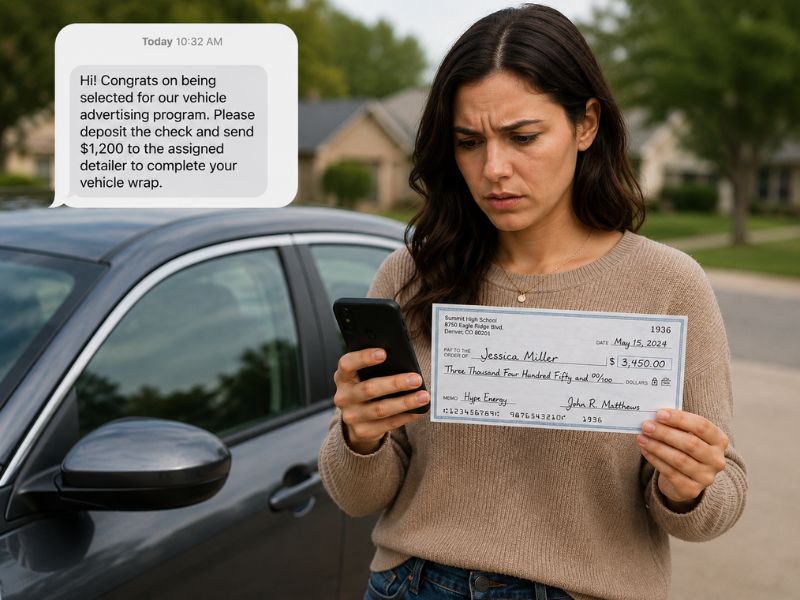
Car Wrap Scam Alert: What You Need to Know
Published on July 14, 2026
Have you received a text message, email, or letter offering hundreds of dollars a week to advertise a brand on your vehicle? While it may sound like an easy way to earn extra money, it could actually be a scam.
TEG Federal Credit Union has recently received reports from members who have encountered a version of the “car wrap scam,” a fraudulent scheme that uses fake checks and convincing instructions to steal money from unsuspecting victims.
What is a Car Wrap Scam?
A car wrap scam typically begins with an email, text message, or online advertisement offering to pay you for displaying advertisements on your vehicle. The scammer may claim to represent an energy drink company, marketing agency, or other well-known brand.
The offer often promises easy money in exchange for wrapping your car with promotional graphics. In reality, there is no advertising campaign, and the scammers are simply looking for a way to trick you into sending them money.
How the Scam Works
The scam usually follows a similar pattern:
- You receive an offer to participate in a vehicle advertising program.
- A check is mailed to you, often from an out-of-state business, school, or organization.
- The check may appear legitimate and can be for several thousand dollars.
- Instructions tell you to deposit the check and use a portion of the funds to pay a “detailer,” installer, or wrap specialist.
- Payment instructions are often provided through text messages after the check arrives.
- You send money to the supposed installer.
- The original check is later discovered to be counterfeit, altered, or stolen, and the funds are removed from your account.
Unfortunately, victims are often responsible for the money they sent before the check was identified as fraudulent.
Red Flags to Watch For
Be cautious if you notice any of the following warning signs:
- An unsolicited offer to earn money by wrapping your vehicle.
- Promises of easy income with little or no work required.
- A check arrives before any services are performed.
- Instructions to send a portion of the money to another person or company.
- Communication takes place primarily through text messages.
- The check is from an unrelated business, organization, or school.
- The company pressures you to act quickly.
Why the Check May Appear to Clear
One of the most common misconceptions about check scams is that if a check is deposited and funds become available, the check must be legitimate.
In reality, federal regulations often require financial institutions to make funds available before a check has fully completed the verification process. It can take days or even weeks for a fraudulent check to be identified.
When that happens, the deposited funds are removed from the account, leaving the victim responsible for any money already spent or sent.
What Should You Do If You Receive One of These Offers?
If you receive a vehicle wrap advertising offer:
- Do not deposit any check you were not expecting.
- Do not send money to anyone based on instructions included with the check.
- Research the company independently before responding.
- Be skeptical of offers that seem too good to be true.
- Contact your financial institution if you have questions about a suspicious check.
- Report suspected scams to the appropriate authorities.
How TEG Can Help
At TEG Federal Credit Union, protecting our members from fraud is a top priority. Scammers are constantly changing their tactics, and schemes like the car wrap scam continue to resurface because they appear legitimate at first glance.
If you receive a suspicious check, an unexpected payment offer, or instructions that require you to send money to a third party, take a moment to verify the situation before taking action. Our team is here to help answer questions and identify potential red flags.
A good rule of thumb: if someone sends you a check and asks you to send part of the money elsewhere, it’s likely a scam. When something seems too good to be true, it usually is.
If you’re ever unsure about a check, text message, email, or offer you’ve received, contact TEG before depositing funds or sending money. A quick phone call could help you avoid becoming a victim of fraud.
Categories: Fraud and Security
More Recent Posts


Retirement might feel like a long way off, but the choices you make today can…

September is National Preparedness Month, which means it’s the perfect time to take a look…

National Dog Day is August 26th, and it is all about celebrating the four-legged friends…