










Are you interested in finance, accountability, and giving back to your community? TEG Federal Credit…

Home Price Forecasts Signal Opportunities Ahead
Published on March 2, 2026 | Last Updated October 12, 2026
Why Home Values Remain Strong
Recent data shows that homeownership continues to be a valuable long-term investment. As mortgage rates ease, more buyers are returning to the market, supporting home prices even as supply remains limited.
Key takeaway: With demand steady and inventory growing slowly, home values are staying supported. If rates drop further, prices could rise even more.
Buyer Activity Supports Home Values
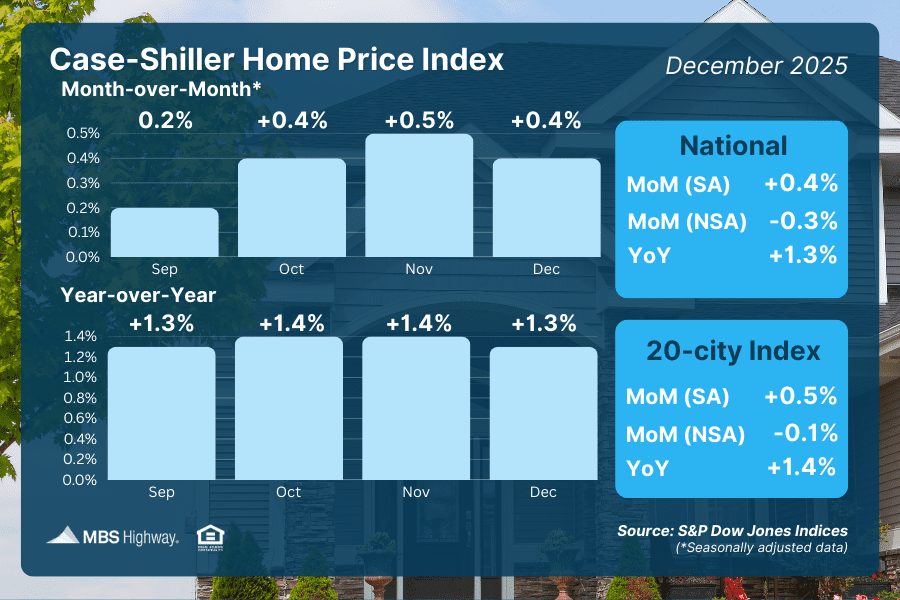
The Case-Shiller Home Price Index showed a small 0.3% dip from November to December, but after seasonal adjustments, prices actually rose 0.4%. Year over year, national home prices are up 1.3%.
Similarly, the Federal Housing Finance Agency (FHFA) House Price Index, which tracks home finances with conventional mortgages, reported a 0.1% month-over-month increase and a 1.8% rise compared to last year.
Looking ahead, Fannie Mac and Pulsenomics’ Home Price Expectations Survey suggests cumulative home price growth of 15% over the next five years. For example, a $500,000 home could gain about $75,000 in value, emphasizing the wealth-building potential of homeownership.
Bottom line: Steady buyer activity combined with limited inventory keeps home prices resilient. If rates continue to fall, we could see even stronger price growth.
Wholesale Inflation Remains Above Expectations
January’s Producer Price Index (PPI) showed wholesale inflation rose 0.5% for the month and 2.9% year over year, surpassing forecasts. Core PPI, which excludes food and energy, climbed 0.8% monthly and 3.6% yearly.
Bottom line: Inflation pressures remain persistent, and the Federal Reserve is likely to remain cautious about cutting rates until it sees clearer signs of cooling in the economy.
The Labor Market Is Changing
Initial jobless claims ticket up slightly to 212,000, while continuing claims dropped to 1.833 million. On the surface, layoffs appear low, but the rise of gig and freelance work may be masking underlying labor market strain.
Bottom line: More workers are turning to contract or app-based jobs instead of traditional unemployment, and many unemployed individuals are taking longer to find full-time roles. This means the labor market may be softer than it appears at first glance.
What This Means For You
- For Buyers: Mortgage rates easing may create opportunities to enter the market or refinance.
- For Homeowners: Steady home growth can build long-term wealth.
- For Everyone: Keep an eye on inflation and labor market shifts, as they influence interest rates and household budgets.
Bottom Line
Homeownership remains a strong wealth-building tool, inflation is still on the Fed’s radar, and the labor market is evolving with gig and freelance work. Staying informed can help you make smarter financial decisions.
Categories: Mortgage & Home Loans
Tags: housing market, tegfcu
More Recent Posts


Retirement might feel like a long way off, but the choices you make today can…

September is National Preparedness Month, which means it’s the perfect time to take a look…

National Dog Day is August 26th, and it is all about celebrating the four-legged friends…