










Are you interested in finance, accountability, and giving back to your community? TEG Federal Credit…

Fed Pauses Again, Housing Sees Weather-Related Slowdown
Published on March 23, 2026 | Last Updated October 13, 2026
Fed Hits Pause Again, but Not Without Debate
For the second meeting in a row, the Federal Reserve kept its benchmark interest rate steady at 3.50% – 3.75%, just as experts expected. While this rate doesn’t directly set mortgage rates, it affects borrowing costs throughout the economy.
Not everyone at the Fed agreed on holding steady. Governor Stephen Miran supported a quarter-point rate cute, pointing to the delicate balance the Fed faces: inflation is still above target, while signs of a cooling job market could increase pressure to lower rates in the coming months. Global uncertainty, particularly tensions in the Middle East, also adds caution to the outlook.
The Fed is moving carefully, keeping rates steady for now while watching inflation, jobs, and global risks.
New Home Sales Fall, Builders Remain Cautious
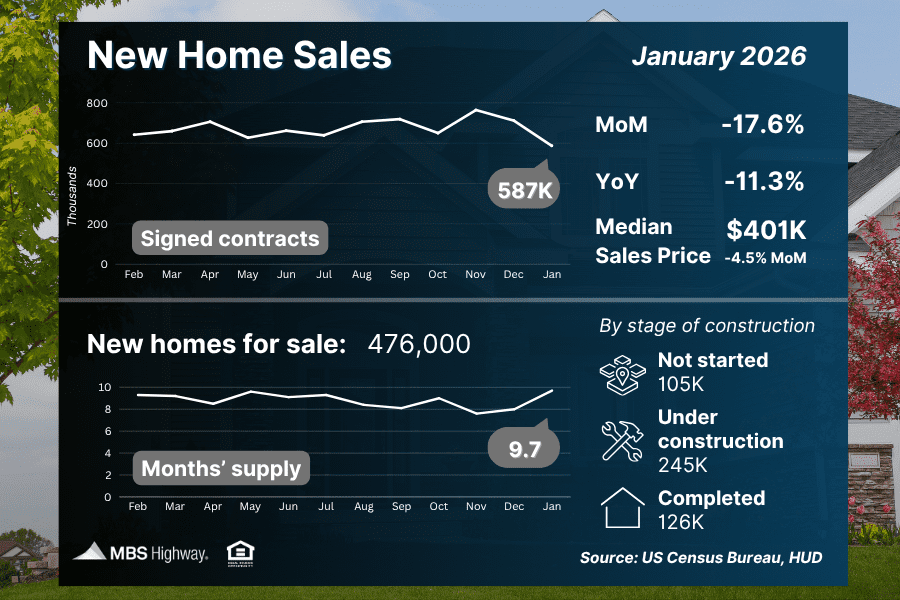
New home sales (signed contracts) dropped nearly 18% from December to January, hitting an annual pace of 587,000. Harsh winter weather likely played a role in the slowdown after stronger sales in November and December.
Builder confidence remains modest. The National Association of Home Builders Housing Market Index nudged up one point in March to 38. A reading below 50 shows more builders view conditions as poor than good, reflecting challenges with affordability and rising construction costs.
While January’s sales dip looks steep, the broader trend is relatively steady. The three-month average sales pace (688,000) is close to the prior three-month average (692,000), indicating demand hasn’t shifted drastically.
Pending Home Sales Edge Up
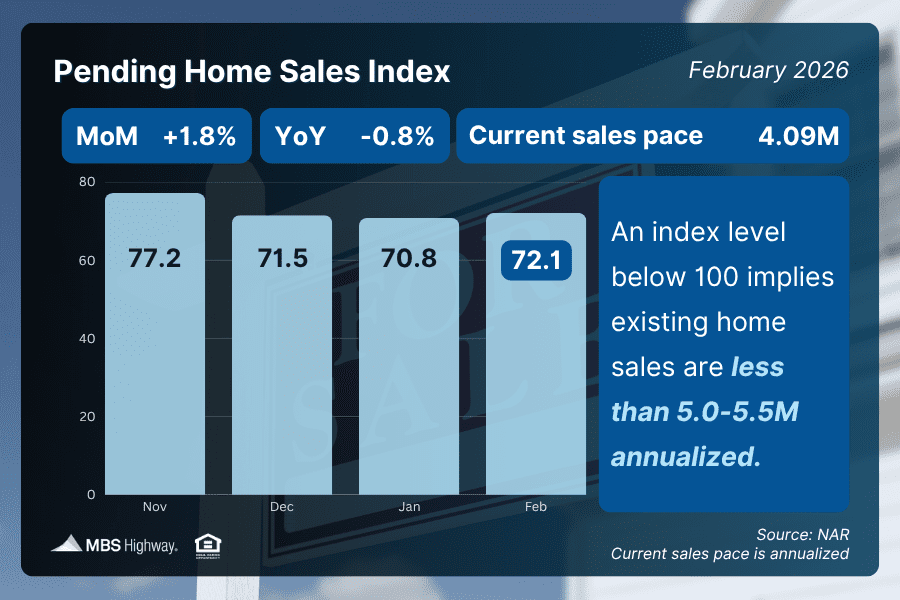
Pending sales for existing homes rose 1.8% from January to Febraury, though they remain 0.8% below last year. February activity was generally positive in the South, West, and Midwest, while the Northeast still faced winter-related slowdowns.
Sales activity was better than expected, and storms likely held back even stronger results. Lower rates and improved affordability likely helped, but the market may face more volatility as global events unfold.
Quick Take: Wholesale Inflation and Jobs
- Wholesale inflation: The Producer Price Index (PPI) increased 0.7% in February and 3.4% year-over-year. Core PPI (excluding food and energy) also came in higher than expected.
- Jobs: Initial jobless claims fell slightly to 205,000, but continuing claims rose to 1.857 million. This suggests some workers are taking longer to find full-time roles or are turning to part-time or gig work.
Inflation remains a concern, while the labor market shows mixed signals, steady overall but with pockets of slower job recovery.
Overall takeaway
The Fed’s pause signals cautious optimism, housing activity shows seasonal and regional effects, and economic indicators like inflation and jobs will continue to guide the next moves.
Categories: Mortgage & Home Loans
More Recent Posts


Retirement might feel like a long way off, but the choices you make today can…

September is National Preparedness Month, which means it’s the perfect time to take a look…

National Dog Day is August 26th, and it is all about celebrating the four-legged friends…