









Are you interested in finance, accountability, and giving back to your community? TEG Federal Credit…

Jobs Data, Inflation, and Housing: A Closer Look
Published on February 17, 2026
What the January Economic Data Is Telling Us
At first glance, January’s economic reports delivered some encouraging news: job growth beat expectations, inflation eased, and housing affordability showed signs of improvement. When looking at the January jobs report and inflation trends, however, the picture becomes more nuanced.
Looking beyond the headlines helps explain where the economy may actually be headed — and why policymakers are still treading carefully.
January’s Jobs Report: Strong Headline, Softer Details
The January Jobs Report from the Bureau of Labor Statistics showed that 130,000 jobs were added last month, more than double what economists expected. The unemployment rate also edged down slightly to 4.3%.
On the surface, that looks like solid momentum. But several underlying indicators suggest the labor market may not be as strong as the headline number implies.
Private-sector jobs data painted a weaker picture, with some reports showing far fewer jobs added — and even net job losses in certain areas. Job openings also declined sharply at the end of last year, and January layoffs reached their highest level for the month since 2009.
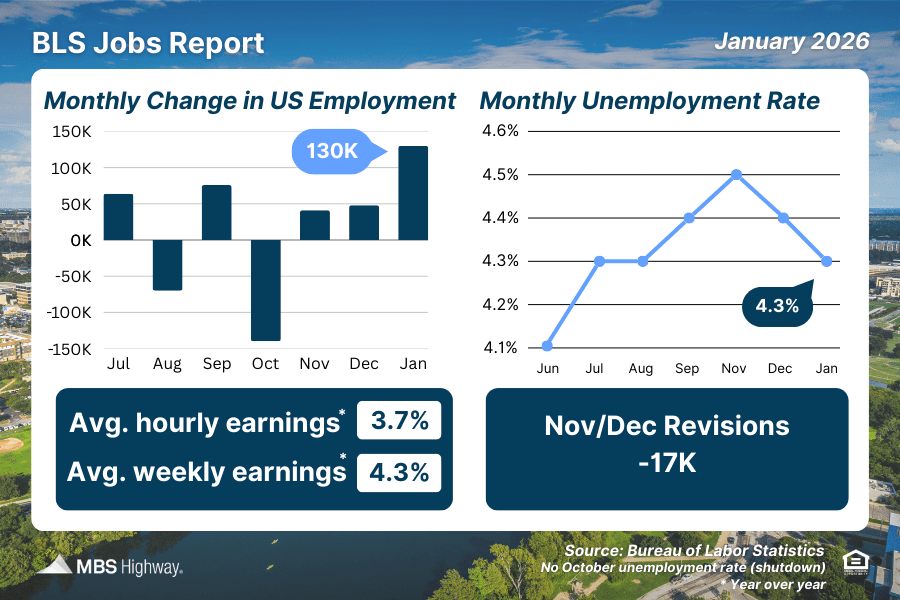
Revision to previous data further complicate the story. Payroll figures for November and December were revised lower, and total job growth for all of 2025 was cut significantly. After revisions, job creation averaged just 15,000 per month last year.
Seasonal adjustments also played a major role. January typically sees large job losses as seasonal and holiday positions end. While raw data showed payrolls falling by millions of jobs, seasonal adjustments turned that decline into a reported gain — making the headline number look stronger than the underlying trend.
What this means: The labor market is still adding jobs, but the pace appears to be slowing beneath the surface.
Inflation Cools to an Eight-Month Low
Inflation data was more encouraging. Consumer prices rose modestly in January and were up 2.4% compared to a year ago — the lowest annual inflation rate in eight months. Core inflation, which excludes food and energy, also eased slightly.
Housing costs remain one of the biggest drivers of inflation. Because shelter makes up a large portion of the Consumer Price Index, even small changes can significantly impact overall inflation readings. January’s shelter data was relatively modest, helping push inflation lower, though airline fares rose sharply and added some upward pressure.
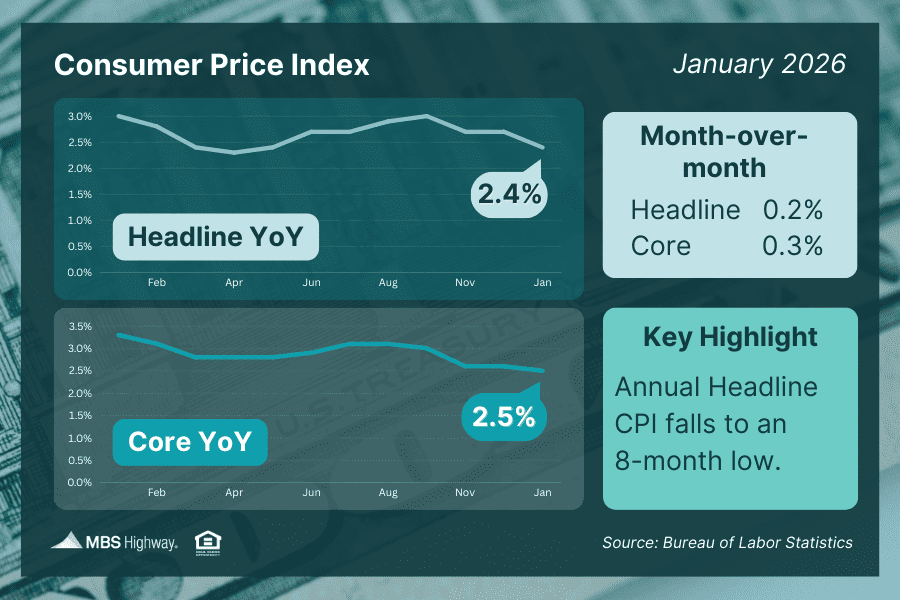
What this means: Inflation is moving in the right direction, but it hasn’t cooled evenly across all categories.
What This Means for Interest Rates and the Federal Reserve
The Federal Reserve continues to balance easing inflation against signs of a cooling labor market. While softer employment data supports the case for rate cuts, inflation that remains above target encourages caution.
The Fed held interest rates steady in January after making several cuts late last year. Although the federal funds rate doesn’t directly determine mortgage rates, it does influence borrowing costs across the economy.
Fed Chair Jerome Powell has emphasized that there is “no risk-free path,” reinforcing that future decisions will depend on how both inflation and employment trends evolve.
Existing Home Sales Start 2026 on a Slower Note
The Federal Reserve continues to balance easing inflation against signs of a cooling labor market. While softer employment data supports the case for rate cuts, inflation that remains above target encourages caution.
The Fed held interest rates steady in January after making several cuts late last year. Although the federal funds rate doesn’t directly determine mortgage rates, it does influence borrowing costs across the economy.
Fed Chair Jerome Powell has emphasized that there is “no risk-free path,” reinforcing that future decisions will depend on how both inflation and employment trends evolve.
Consumer Spending and Unemployment Trends
Consumer spending showed signs of fatigue at the end of the year. While early holiday shopping was strong, December retail sales stalled, with most retail categories posting declines.
Meanwhile, initial unemployment claims edged lower, but continuing claims rose and have remained elevated for months. This suggests that while fewer people are losing jobs, those who are unemployed may be taking longer to find new work.
The Bottom Line
January’s economic data sends mixed signals. Inflation is easing, affordability is improving, and job growth hasn’t disappeared — but the labor market is cooling and consumer spending is showing signs of strain.
That combination explains why policymakers are moving carefully and why economic headlines deserve a closer look beyond the surface numbers.
Categories: Mortgage & Home Loans
More Recent Posts


TEG Federal Credit Union will award three $1,000.00 scholarships to graduating high school seniors who…

Buying a car is exciting — but it can also feel overwhelming. Between comparing models,…

March is National Credit Education Month, making it the perfect time to learn more about…

What Is the Current Home Price Forecast? Recent housing data suggests home prices remain stable…