









Are you interested in finance, accountability, and giving back to your community? TEG Federal Credit…

Housing Data Delivers an Upside Surprise
Published on January 7, 2026
Market Snapshot
Recent housing and economic data delivered a welcome surprise, pointing to improving momentum as we head toward the new year. Pending Home Sales jumped more than expected, home prices showed early signs of acceleration, and unemployment claims dipped below forecasts.
Below is a breakdown of the key data—and what it means for the housing market.
Pending Home Sales Jump in November
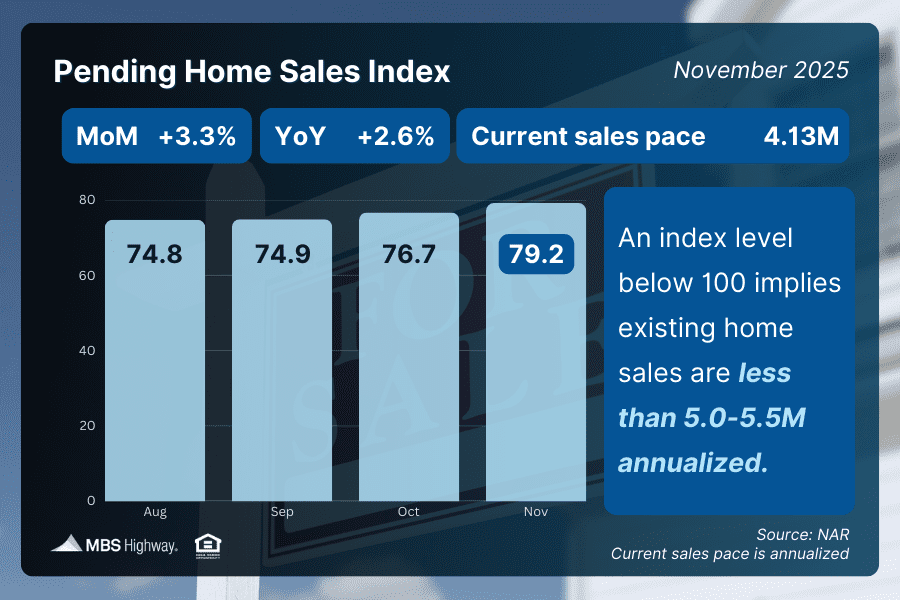
Pending Home Sales increased 3.3% from October to November, significantly outperforming expectations and reaching their strongest level in nearly three years, according to the National Association of REALTORS® (NAR). Even more encouraging, contract signings were 2.6% higher than a year ago.
Because Pending Home Sales typically lead actual closings by one to two months, this increase suggests stronger transaction activity may be ahead.
NAR Chief Economist Lawrence Yun pointed to improving affordability as a key drive, noting that:
- Mortgage rates have eased
- Wage growth is outpacing home price growth
- Housing inventory has improved
Together, these factor appear to be pulling buyers back into the market.
Home Prices Show Signs of Renewed Momentum
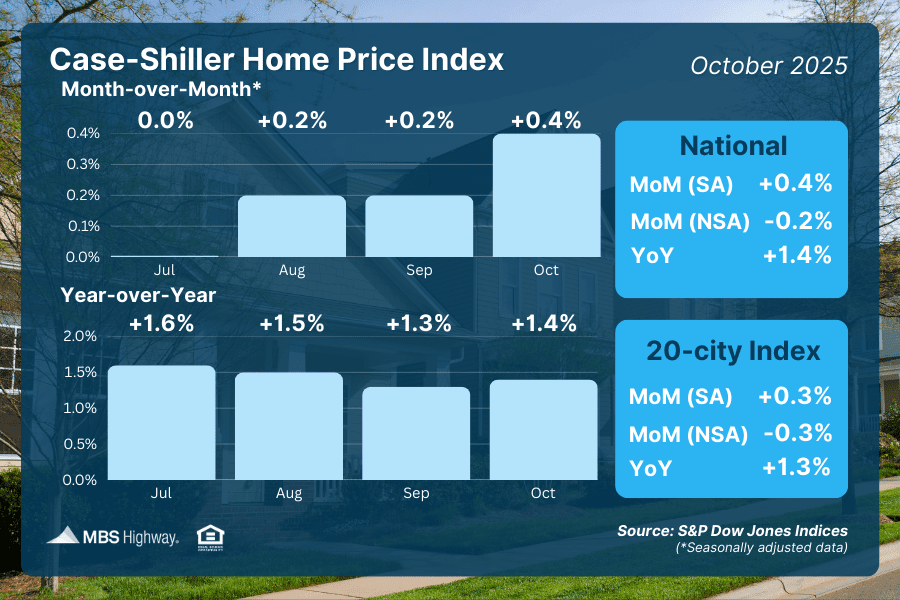
The Case-Shiller Home Price Index, a widely watched measure iof U.S. home values, showed mixed but encouraging results.
- Prices dipped 0.2% month-over-month before seasonal adjustment
- After seasonal adjustment, prices rose 0.4%
- Year over year, prices were 1.4% higher, up slightly from September’s 1.3% gain
Meanwhile, the FHFA Home Price Index, which tracks homes finances conventional mortgages, also reported:
- A 0.4% month-over-month increase (seasonally adjusted)
- A 1.7% year-over-year gain, slightly stronger than Case-Shiller
Unemployment Claims Dip on Seasonal and Timing Effects
Labor market data also came in better than expected. Initial jobless claims fell by 16,000, with 199,000 people filing for unemployment benefits for the first time in the latest week.
Continuing claims—those still receiving benefits—declined by 47,000 to 1.866 million.
The decline likely reflects seasonal factors:
- Employers often delay layoffs ahead of the holidays
- Holiday travel may have postponed some filings
While continuing claims have remained elevated for much of the year, they may begin to ease as benefit eligibility expires. In most states, unemployment benefits last up to 26 weeks, and a spike in claims last June suggest many recipients may now be reaching the end of that window.
Bottom Line
The latest data paints a cautiously optimistic picture:
- Pending Home Sales are rising and pointing to stronger closings ahead
- Home prices are showing early signs of renewed momentum
- The labor market remains resilient
If these trends continue, the housing market could see improved activity and modest price acceleration as we move forward.
Categories: Education, Mortgage & Home Loans
Tags: tegfcu
More Recent Posts


TEG Federal Credit Union will award three $1,000.00 scholarships to graduating high school seniors who…

Be honest with yourself. Have you started looking at homes online yet? Scrolling through real…

Our Power, Our Planet 🌎 This Earth Day, we’re reminded that small choices make a…

A Closer Look at Today’s Economy In this blog, we’ll share a jobs report and…